


Keynote Speakers
Keynote 1
(9:50-10:40 Wed, Nov 20)Efforts for high-efficiency cutting of
difficult-to-machine materials
Akira Hosokawa, Komatsu university, JAPAN
ABSTRACT
In recent years, the demand for cutting difficult-to-machine materials such as Ni-based alloys in the aerospace and other industries has increased rapidly. However, the high-temperature strength, work hardenability and low thermal conductivity increase cutting resistance, raise cutting temperatures, resulting in significant tool wear. There are several cutting techniques to solve this problem. An actively-driven rotary turning is expected to improve the tool life and productivity, in which the round cutting tool undergoes a thermodynamic cycle characterized by intermittent heating and cooling, which reduces tool temperature and tool wear. Turning with high pressure cutting fluid (HPC) is also an effective method to reduce tool wear and improve surface quality by efficiently removing heat from the cutting tool and workpiece near the cutting point via a coolant jet. Another approach is to develop a novel multilayer coating using lubricating VN and heat-resistant AlCrN to reduce cutting forces, cutting temperatures, and adhesion of cutting chips.
BIOGRAPHY
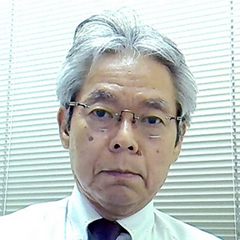
Akira Hosokawa
Professor Hosokawa Akira received his Bachelor's degree from Osaka University, Japan, in 1980 and Master's degree and Doctoral Degree in engineering from Graduate School of Engineering Science, Osaka University, Japan, in 1982 and 1985, respectively. After a year as a research student, he worked for Sumitomo Electric Industries, Ltd. from 1986 to 1987. He started his academic career at Kumamoto University in 1987, and became an associate professor of the Department of Mechanical Engineering, in 1994. In 1998, he was appointed as an associate professor at Kanazawa University, and became a professor of the Department of Mechanical Systems Engineering, Kanazawa University, in 2004. After retiring from Kanazawa University in 2022, he became a professor at the Department of Production Systems Engineering and Sciences, Komatsu University. He is a Fellow of the Japan Society for precision Engineering (JSPE)
His research interests are grinding, cutting, abrasive processing and laser processing. In relation to these studies, he is also conducting research into in-situ sensing and measurement during machining, such as evaluation of the grinding wheel topography using image analysis and grinding sounds. To achieve high-efficiency, high-quality machining of difficult-to-cut materials, he has been involved in research into hard turning with rotary tools, cutting using high-pressure coolant, and the development of coated tools that have both heat resistance and lubricity.
Keynote 2
(9:50-10:40 Thu, Nov 21)AI-Empowered Mechatronics?
Okyay Kaynak, Bogazici University and Turkish Academy of Sciences, TURKEY
ABSTRACT
During the last two decades, profound technological changes have occurred around us, supported by disruptive advances both on the software and hardware sides. Additionally, we have witnessed a cross-fertilization of concepts and an amalgamation of information, communication, and control technology-driven approaches. This has led to what is termed as digital transformation, i.e., the integration of digital technology into all areas of business, fundamentally changing how companies operate and deliver value to customers. The most recent development is integrating Artificial Intelligence (AI) in digital transformation as the primary enabler and the facilitator. It is expected that the applications of AI will truly transform our world and impact all facets of society, economy, living, working, healthcare and technology, including mechatronics, historically the earliest multidisciplinary field.
The study of artificial intelligence (AI) has been a continuous endeavor of scientists and engineers for over 65 years. The simple contention is that human-created machines can do more than just labor-intensive work; they can develop human-like intelligence. AI has been very appealing as it aligns with the nature of human beings in terms of their never-satisfied demands for higher productivity on the one hand and, on the other hand, the curiosity of how we understand and try to change the world. Having gone through several historical stages with several winters, AI has become a leading technology today and plays novel roles like never. Therefore, it is time to discuss the past, the present, and the future of both the AI tools and the AI "beings" in connection with mechatronics.
BIOGRAPHY

Okyay Kaynak
Okyay Kaynak received the B.Sc. degree with first-class honors and Ph.D. degrees in electronic and electrical engineering from the University of Birmingham, UK, in 1969 and 1972, respectively.
From 1972 to 1979, he held various positions within the industry. In 1979, he joined the Department of Electrical and Electronics Engineering, Bogazici University, Istanbul, Turkey. He is currently a Professor Emeritus of this university. He has held long-term (near to or more than a year) Visiting Professor/Scholar positions at various institutions in Japan, Germany, the U.S., Singapore, and China. His current research interests are in the broad field of intelligent systems. He has authored three books, edited five, and authored or co-authored more than 450 papers that have appeared in various journals and conference proceedings.
Dr. Kaynak has served as the Editor in Chief of IEEE Trans. on Industrial Informatics, IEEE/ASME Trans. on Mechatronics and as the Co-Editor in Chief of IEEE Trans. on Industrial Electronics. He presently serves as the Founding Editor-in-Chief of IEEE Transactions on Industrial Cyber Physical Systems. Additionally, he is on the Editorial or Advisory Boards of several scholarly journals. He has received the Chinese Government's Friendship Award, Humboldt Research Prize, Doctor Honoris Causa, Obuda University, Hungary, Fellowship of Asian Control Systems Association (2024), and the Academy Prize of the Turkish Academy of Sciences (2020). He is a member of this Academy.
Keynote 3
(10:40-11:30 Thu, Nov 21)Motivation for Machine Motion
Jun'ichi Kaneko, Saitama university, JAPAN
ABSTRACT
In recent years, efforts to increase the speed and accuracy of machine tools have evolved further, and various initiatives have been proposed in CAM for path generation and CNC for machine tool control. These efforts are primarily oriented to ensure the accuracy of tool path coordinates. As a result, while each vendor achieves high accuracy in individual areas, such as CAM accuracy and machine tool position accuracy, problems with the machined surface caused by the effects of machine motion during actual machining process to be solved by the user in the end.
In response to this problem, studies have been proposed in recent years to address the various physical characteristics of machine tools back to the planning stage, such as CAM and post-processing, to ensure the quality of the final machined surface. We would like to introduce examples of past research and our own research on these topics, and discuss future prospects.
BIOGRAPHY

Jun'ichi Kaneko
Jun’ichi KANEKO received the PhD in Engineering from Osaka University, Japan, in 2004.He joined Saitama University in 2004. Since then, he has been engaged in research on simulation of machining processes, CAM algorithms, and optimization of multi-axis machining operations. Currently, he is a professor at Saitama University. He is a board member of the Japan Society for Die and Mould Technology, an ISO committee member, and a member of the Japan Society of Mechanical Engineers and the Japan Society for Precision Engineering.
